PPO vs. HMO Health Insurance: What's the Difference and Which Is Right for You?

🌻 BrightBloom Health
By Nicole Carson | Licensed Health Insurance Advisor
📖 7 Minute Read
📅 Last Updated: August 10, 2026

Choosing a health insurance plan can feel overwhelming—especially when you're faced with unfamiliar terms like PPO and HMO.
Many people automatically choose the lowest monthly premium, only to discover later that their preferred doctors aren't covered or that they need referrals for specialist visits.
Understanding the differences between these two popular health insurance plan types can help you avoid costly mistakes and choose coverage that fits both your healthcare needs and your budget.
At Bright Bloom Health, we help individuals, families, self-employed professionals, and small businesses compare health insurance options so they can make confident decisions—not confusing ones.
What Is a PPO Health Insurance Plan?
A Preferred Provider Organization (PPO) plan offers greater flexibility when choosing healthcare providers.
With a PPO plan, you can usually:
✔ Visit specialists without a referral
✔ Choose from a large network of doctors and hospitals
✔ Receive partial coverage when seeing out-of-network providers
✔ Keep your current doctors more easily
Because of this flexibility, PPO plans often have higher monthly premiums than HMO plans, but many people find the added convenience well worth the cost.
What Is an HMO Health Insurance Plan?
A Health Maintenance Organization (HMO) plan is designed to lower healthcare costs through a coordinated care system.
With an HMO, you'll typically:
✔ Select a Primary Care Physician (PCP)
✔ Receive referrals before seeing specialists
✔ Stay within the plan's network for most services
✔ Enjoy lower monthly premiums and copays
For people who rarely travel and are comfortable using one healthcare network, an HMO can be an excellent value.
PPO vs. HMO: Side-by-Side Comparison

Which Plan Costs Less?
Many people assume the cheapest monthly premium saves the most money—but that's not always true.
When comparing health insurance plans, consider:
Monthly premium
Annual deductible
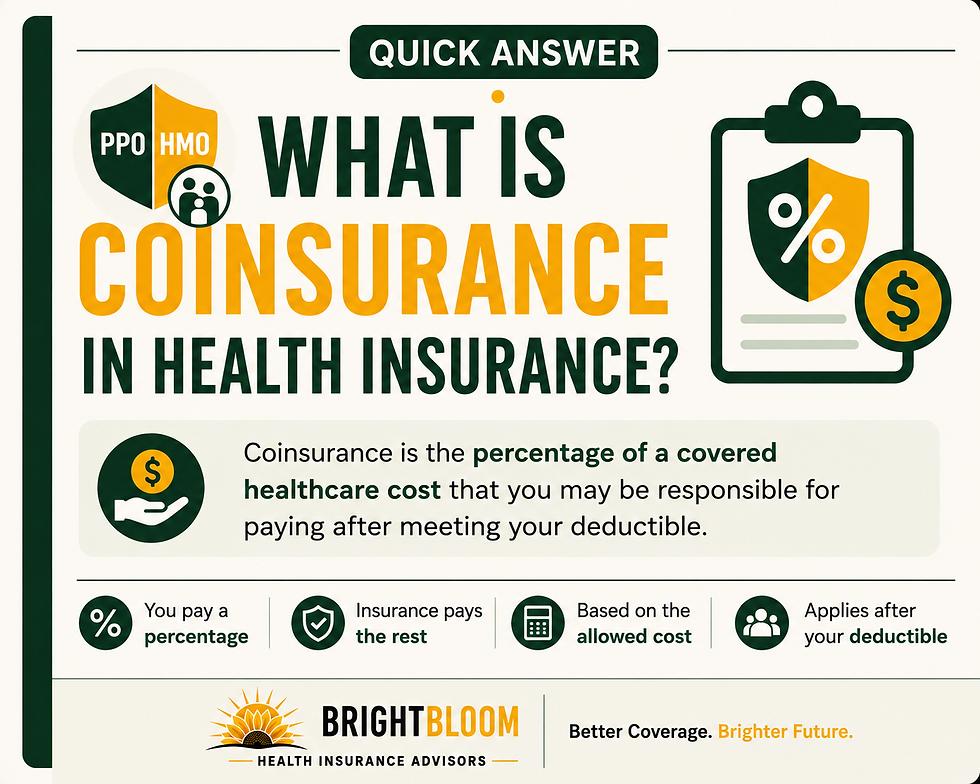
Coinsurance
Out-of-pocket maximum
Prescription drug costs
Sometimes a plan with a slightly higher monthly premium actually costs less throughout the year because of lower deductibles and better coverage.
That's why looking at the total cost—not just the premium—is so important.
Which Plan Is Better for Families?
There's no one-size-fits-all answer.
A PPO may be a better fit if your family:
Sees specialists regularly
Has children with ongoing medical needs
Wants access to multiple hospitals
Travels frequently
Wants flexibility when choosing doctors
An HMO may be a better choice if your family:
Is generally healthy
Wants lower monthly premiums
Primarily visits one local healthcare system
Doesn't mind getting referrals
Which Plan Is Better for Self-Employed Individuals?
If you're self-employed, your healthcare needs are unique.
Many entrepreneurs appreciate PPO plans because they:
Allow greater flexibility
Offer larger provider networks
Work well for people who travel
Make it easier to continue seeing existing doctors
However, if lowering monthly expenses is your primary goal, an HMO may provide excellent value.
The best choice depends on your healthcare usage, income, and budget.
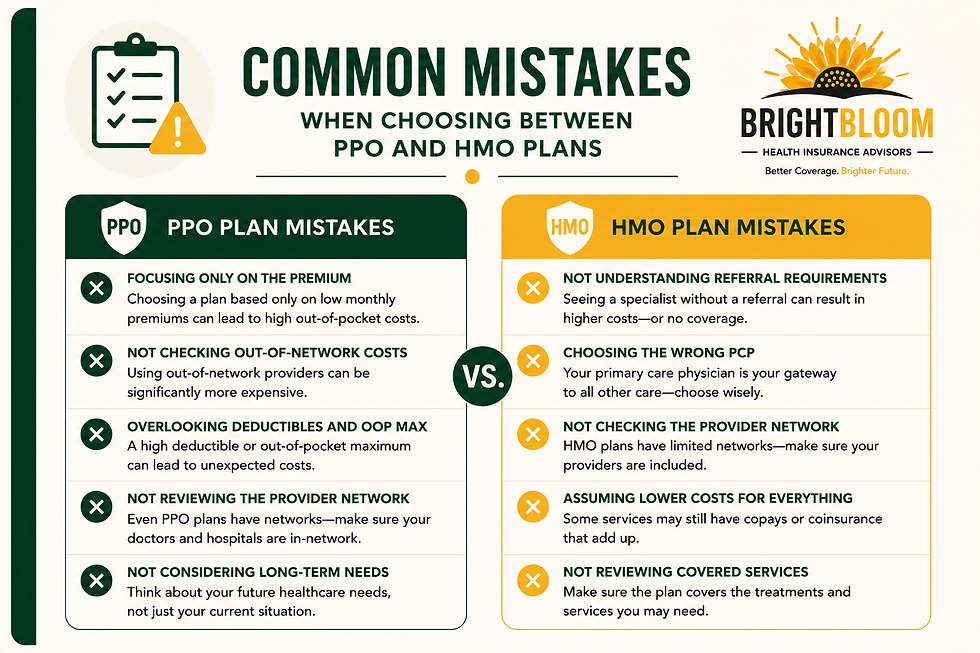
Bright Bloom Health Tip
Many people spend hours comparing plans online but still aren't confident they're making the right choice.
That's because health insurance is about much more than premiums.
We help clients compare:
Total yearly healthcare costs
Doctor and hospital networks
Prescription coverage
PPO and HMO options
Deductibles
Out-of-pocket expenses
Family healthcare needs
Our goal is to help you understand your options—not simply enroll you in a plan.
Still have questions? Below are answers to some of the most common questions people ask when comparing PPO and HMO health insurance plans. If you don't see your question here, Bright Bloom Health is always happy to help.

Frequently Asked Questions
Is a PPO better than an HMO?
Neither is universally better. PPO plans offer greater flexibility, while HMO plans often provide lower monthly costs. The right choice depends on your healthcare needs and budget.
Can I keep my current doctor?
It depends on the plan's provider network. Before enrolling, it's important to verify that your preferred doctors participate in the network. At Bright Bloom Health, we help clients check provider availability before choosing a plan.
Why are PPO plans more expensive?
PPO plans typically offer broader provider networks, no referral requirements, and some out-of-network coverage, which often results in higher monthly premiums.
Can I see a specialist without a referral?
With most PPO plans, yes. HMO plans generally require a referral from your primary care physician before seeing a specialist.
Which plan is better for families?
The best plan depends on your family's healthcare needs, preferred doctors, medications, and budget. Families with ongoing medical needs often benefit from the flexibility of PPO plans, while healthier families may save money with an HMO.
Let Bright Bloom Health Help You Compare Plans
Understanding the difference between PPO and HMO health insurance doesn't have to be complicated.
At Bright Bloom Health, we help individuals, families, self-employed professionals, and small businesses compare health insurance options based on their healthcare needs, preferred providers, and budget—not just the monthly premium.
Whether you're enrolling for the first time, changing jobs, starting a business, or reviewing your current coverage, we're here to help you make a confident decision.
Schedule your free consultation today and let Bright Bloom Health help you find coverage that fits your life—not just your budget.


Comments