What Is a Copay? Understanding One of the Most Common Health Insurance Costs

Updated: Aug 11
🌻 BrightBloom Health
By Nicole Carson | Licensed Health Insurance Advisor
📖 7 Minute Read
📅 Last Updated: July 21, 2026
What Is a Copay?
If you've ever looked at your health insurance card or plan documents, you've probably seen something like:
Primary Care Visit – $30 Copay
Specialist Visit – $60 Copay
Urgent Care – $50 Copay
But what exactly is a copay, and when do you have to pay one?
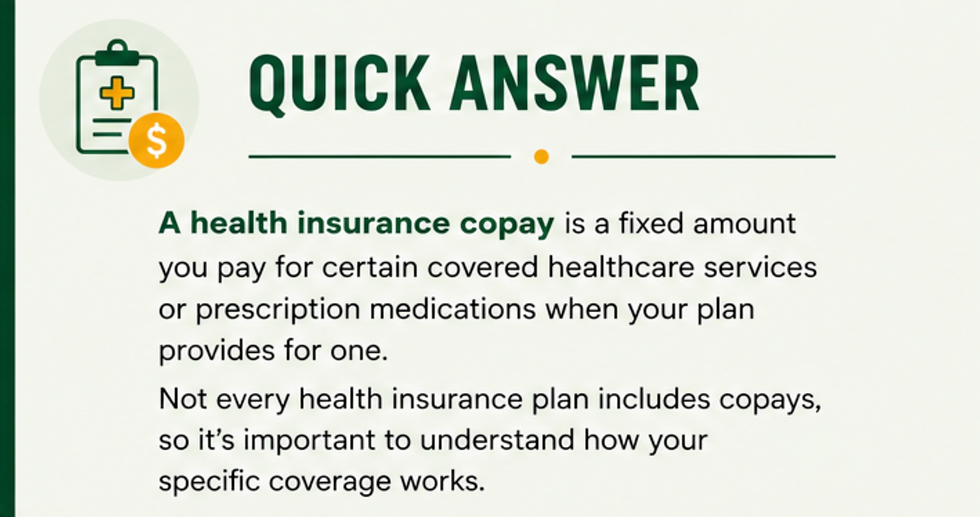
A copay (short for copayment) is a fixed dollar amount you pay for certain healthcare services or prescription medications. Your health insurance pays the remaining covered cost.
Unlike your monthly premium, you only pay a copay when you actually receive care.
How Do Copays Work?
If your health insurance plan includes copays, you'll typically pay a fixed amount when you receive certain covered healthcare services. The exact amount depends on your plan and the type of service you're receiving.
Here's a simple example of how the process works:

Think of It Like an Admission Ticket
Imagine going to a movie.
You don't pay for the entire theater—you simply pay your ticket price to get in.
A copay works in a similar way.
Instead of paying the full cost of a doctor's visit, you pay your predetermined amount, and your insurance covers the rest according to your plan.
Common Health Insurance Copays

Every health insurance plan is different, but you may see copays for:
Primary care doctor visits
Specialist appointments
Urgent care visits
Emergency room visits
Physical therapy
Mental health counseling
Prescription medications
Do Copays Count Toward Your Deductible?
This is one of the biggest misconceptions.
The answer is:
Sometimes—but not always.
Many health insurance plans allow you to see your primary care doctor or receive preventive services with only a copay, even if you haven't met your deductible.
Other plans require you to satisfy your deductible before copays apply.
Always review your plan's Summary of Benefits to understand how your specific coverage works.
Does a Copay Count Toward Your Out-of-Pocket Maximum?
Yes.
In most health insurance plans, the money you spend on copays counts toward your annual out-of-pocket maximum.
Once you've reached that limit, your insurance typically pays 100% of covered in-network medical expenses for the rest of the plan year.
Copay vs. Deductible
These two terms are often confused.
A deductible is the amount you must pay for covered healthcare services before your insurance begins sharing costs for many services.
A copay is a fixed amount you pay for certain covered services, regardless of the total bill.
For example:
You visit your primary care doctor.
Office visit cost: $180
Your copay: $30
Insurance pays: $150
You pay only your copay because that's what your plan requires for that visit.
Copay vs. Coinsurance
People also confuse copays with coinsurance.
Here's the difference:
Copay
Fixed dollar amount
Example: $40 doctor visit
Coinsurance
Percentage of the medical bill
Example: You pay 20% and insurance pays 80%
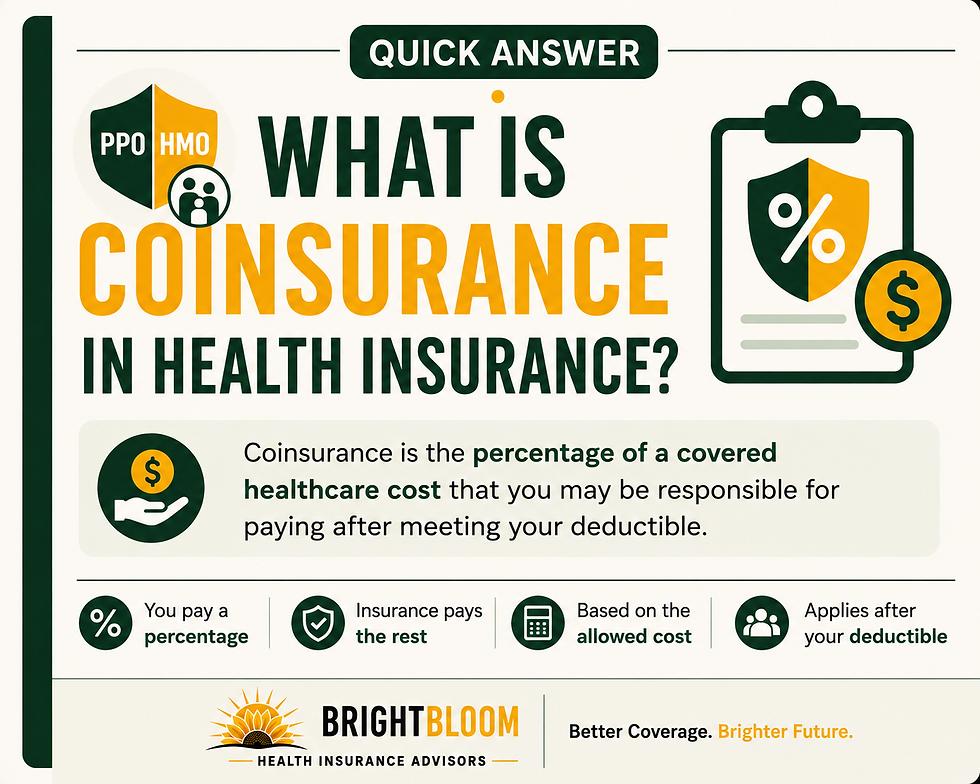
We'll cover coinsurance in more detail in our next Learning Center article.

Can Preventive Care Have a Copay?
Many preventive services are covered at no additional cost when you use an in-network provider.
Examples include:
Annual wellness exams
Routine vaccinations
Many preventive screenings
Well-woman visits
Certain pediatric preventive services
If the visit includes treatment for a new illness or additional testing beyond preventive care, normal cost-sharing—including a copay or deductible—may apply depending on your plan.

Frequently Asked Questions
Is a copay the same as my deductible?
No. A copay is a fixed amount you pay for certain services, while a deductible is the amount you pay before your insurance begins sharing costs for many covered services.
Do I pay a copay every time I see a doctor?
Usually, yes. If your plan includes copays for office visits, you'll generally pay the applicable copay each time you receive that service.
Are prescriptions covered by copays?
Many plans use copays for prescription drugs, but the amount depends on whether the medication is generic, preferred brand, or specialty.
Can my copay change every year?
Yes. Health insurance benefits are reviewed annually, and copay amounts may change when you renew or switch plans.
🌻 Continue Learning
Health insurance terms can be confusing, but learning them one step at a time makes choosing the right coverage much easier.
These articles build on one another and are designed to help you better understand how health insurance works before choosing a plan.
Learn how deductibles work, when they apply, and why they matter when choosing a health insurance plan.
📝 What Is Coinsurance? (Coming Soon)
Understand how coinsurance works after your deductible is met and how it affects your share of medical costs.
📝 What Is an Out-of-Pocket Maximum? (Coming Soon)
Learn what this important limit means and how it protects you from high healthcare expenses.
📝 What Is a Fixed Indemnity Health Insurance Plan? (Coming Soon)
Discover how fixed indemnity plans work, how they differ from traditional health insurance, and why they may be a good option for some individuals and families.
📝 PPO vs. HMO: What's the Difference? (Coming Soon)
Compare provider networks, referrals, flexibility, and costs so you can choose the right plan for your needs.
Still have questions?
Every health insurance plan is different, and understanding how your specific benefits work can make a big difference when choosing coverage.
Need Help Choosing the Right Health Insurance Plan?
Whether you're comparing plans, trying to understand your current benefits, or exploring health insurance options for the first time, BrightBloom Health is here to help.
We provide personalized guidance to help individuals, families, self-employed professionals, and small businesses compare health insurance plans, understand their benefits, and choose coverage with confidence.


Comments